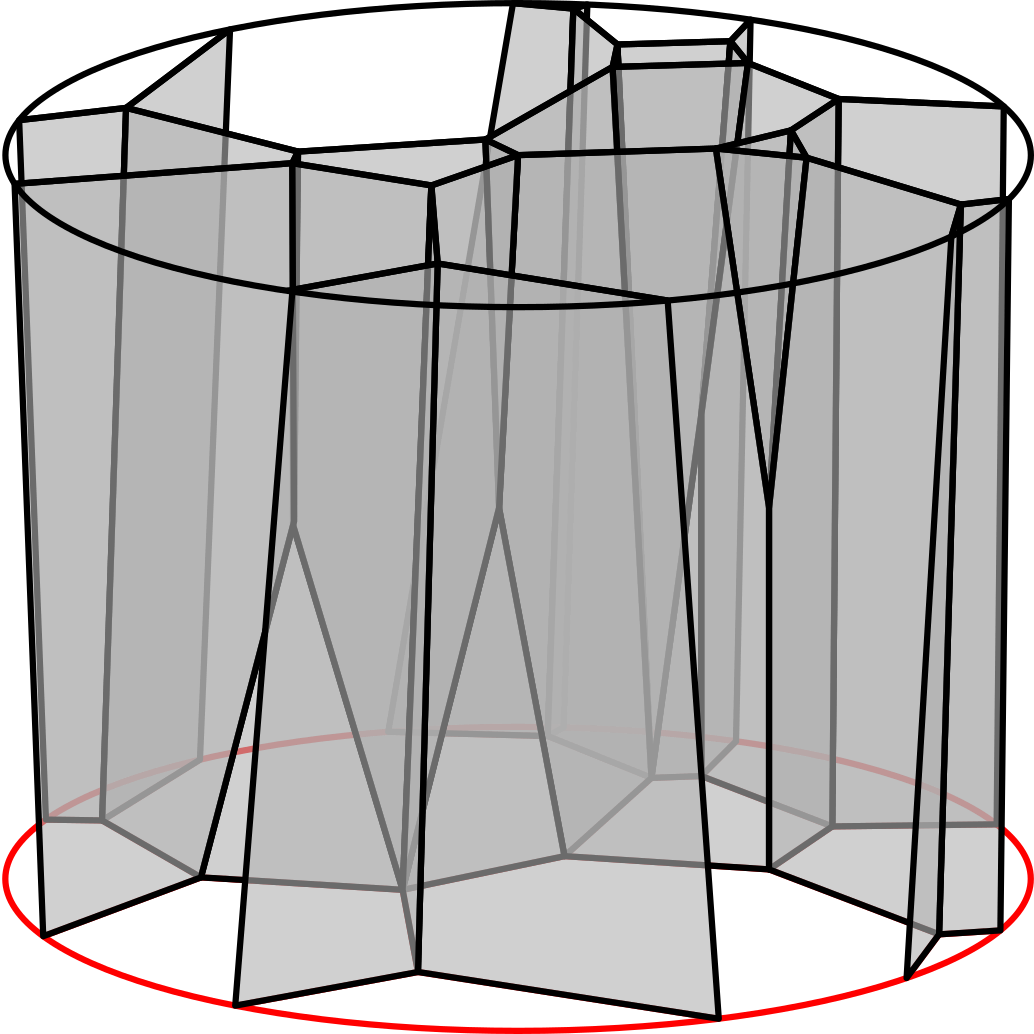
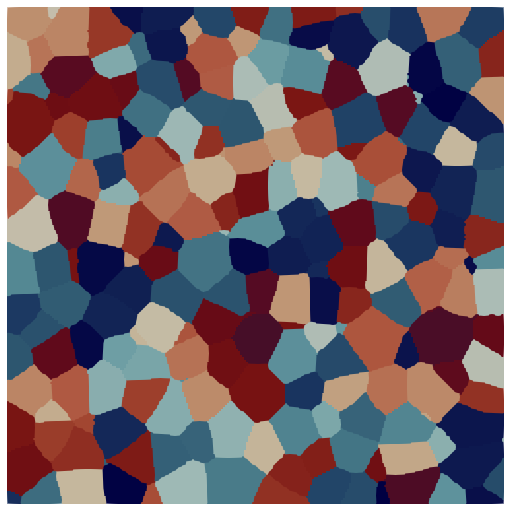
Dependence of Microstructure Classification Accuracy on Crystallographic Data Representation
Deep learning algorithms are continuing to be adopted to classify and analyze material microstructures. However, it is unclear how crystallographic orientation in EBSD data should be represented, and whether this choice impacts the analysis of material micrographs. We propose a spectral embedding of crystallographic orientations in a space that respects the crystallographic symmetries. Our results indicate that networks trained this representation performs the best, even on small volumes of data which could be accessible by practical experiments.
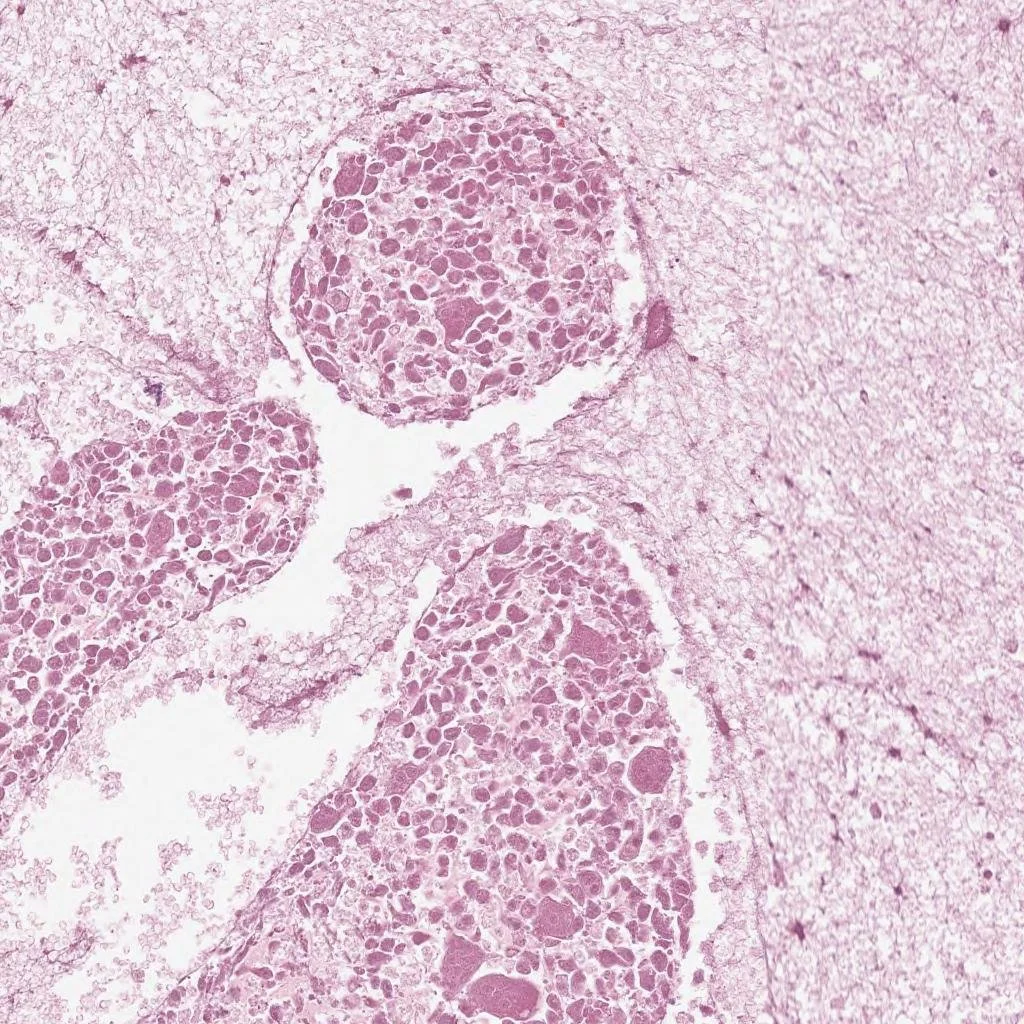
Classification of Histopathology Slides with Persistent Homology Convolutions
Here we introduce a novel computational frameworks to extract local topological and geometric features from images. We apply our method on a histopathology dataset for classification and perform a comparative study using various representations of the slides. Our results find that models trained with data generated by our method outperform conventionally trained models and are less sensitive to hyperparameters.